


29 Jul 2026
HMRC winding up petitions: how can funders protect value?
What to do immediately
An HMRC winding up petition against a borrower can have a tremendous impact on a funder’s security. In this article, we look at the issues that can arise following an HMRC petition and the practical steps funders can take to minimise their risk.
Although compulsory liquidations remain lower than voluntary liquidations, they have continued to increase since the low point seen in 2021. Over the last 12 months, monthly compulsory liquidations have been below 500 per month (based on data from the Insolvency Service), compared with voluntary liquidations fluctuating around 1500 each month (based on Companies House data).
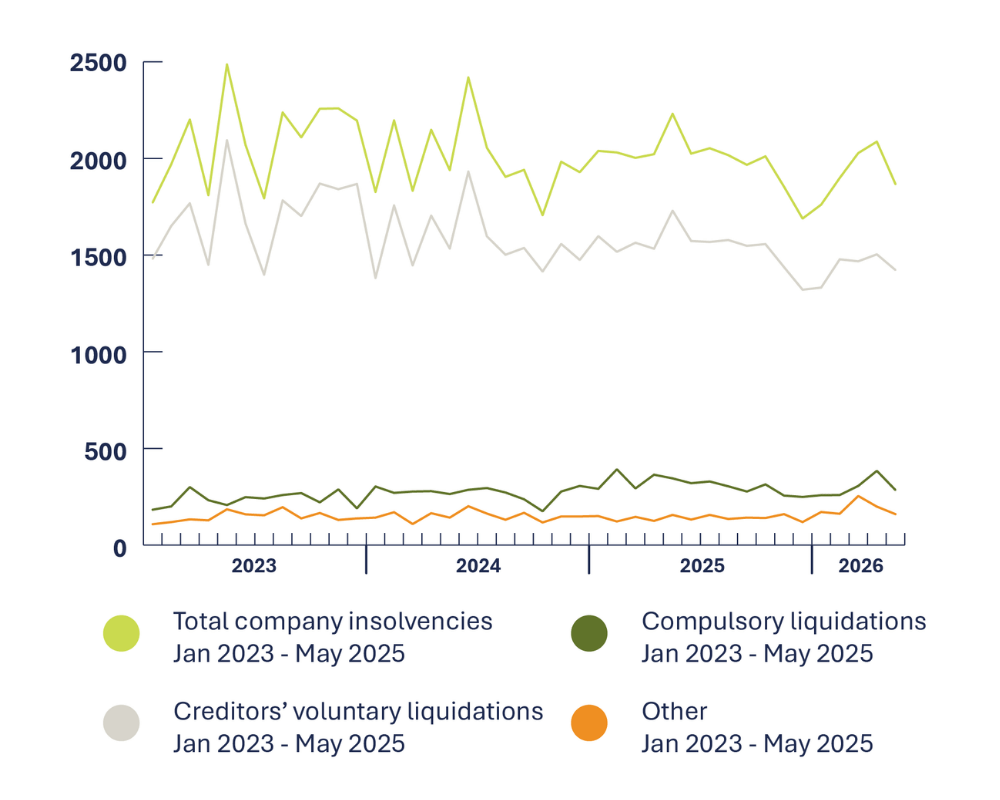
Figure 1: Company liquidation levels from 2023 to mid 2026
HMRC is the most common petitioner, usually where a company has defaulted on a Time to Pay (TTP) agreement.
The process begins when the Court issues a petition, which is then served on the company. The petition will include a hearing date, normally around six weeks later, and is advertised in The London Gazette approximately two weeks before the hearing.
Loss of control and damage to security value after an HMRC winding up petition
The issuing of an HMRC petition to wind up has an immediate impact on the enforcement options available to secured lenders. It also introduces a range of legal complications that can adversely affect asset realisations and reduce the value of a lender’s security.
Appointment process
Once a winding up petition has been issued, directors can no longer use the usual process of appointing administrators by filing documents at court. Instead, they must apply to the Court, which makes the process more costly and time-consuming. This can be especially difficult where a pre-pack administration is planned, and the sale needs to complete immediately after the administrators are appointed.
If a quick appointment of administrators is required, this will need to be done by the secured creditor (assuming it holds a qualifying floating charge over the assets of the Company).
Continuing to trade and freezing bank accounts
If a winding up order is ultimately made, any disposal of company property after the petition has been issued is void, including payments made from the company’s bank account.
Consequently, banks will usually freeze accounts as soon as they become aware of the petition. This will almost certainly happen once the petition to wind up has been advertised, but it can happen earlier if the bank is notified beforehand.
Once bank accounts are frozen it is practically impossible for a company to continue to trade and this can be very damaging to asset/security value and to the position of creditors generally. The only way to overcome this is to apply to court for a validation order.
Validation orders
To grant a validation order, the Court will need detailed evidence explaining which payments are necessary and why making those payments is in the interests of creditors.
This requires full detailed disclosure of:
- the company’s financial position
- what payments the Court is being asked to validate (payroll, key/critical suppliers, costs etc.)
- the proposed strategy for dealing with the company and how making these payments should lead to a better outcome for creditors
Validation orders can often be obtained quickly. In a recent case we were involved with, we secured one within four days. But the level of detail and legal input needed can be costly (in that case, around £20,000).
Adjournment of liquidation hearing
If the proposed strategy cannot be implemented before the hearing date, you’ll need to act quickly to prevent the Court from making a winding up order.
Appointing an administrator will bring the winding up proceedings to an end. However, where the appointment cannot take place before the hearing, an adjournment may be required.
We find that HMRC is receptive to adjournments but (like the Court) they need to be persuaded that there is a sensible strategy in place to produce a better outcome than making the winding up order.
HMRC winding up petitions: protective steps for lenders
Once a winding up petition has been issued, the available options become much more limited. From a lender’s perspective, the key is to identify the risk early and act before a petition is presented.
- Once a winding up petition has been issued, the available options become much more limited. From a lender’s perspective, the key is to identify the risk early and act before a petition is presented.
- As HMRC is the most common petitioner, lenders should be aware of any outstanding tax liabilities, ongoing negotiations with HMRC and any Time to Pay agreements. It’s essential to monitor whether payments are being maintained if a TTP arrangement is in place.
- Litigation is another potential source of HMRC winding up petitions, especially once a judgment has been obtained and enforcement action begins. As with HMRC debts, lenders should always be aware of such risks.
What can we do to help?
HMRC negotiations
Once HMRC has issued a petition, it cannot be reversed. However, our specialist tax colleagues can work with HMRC before that stage to help avoid a petition being issued in the first place. This may involve renegotiating TTP agreements which can allow more time for creative restructuring plans.
Investigations
We carry out borrower reviews ranging from full options assessments to more focussed investigations. These reviews help gather information and highlight risks to lenders and directors.
Restructuring
Once issues have been identified and the available options reviewed, we can help implement the most appropriate restructuring solution. This could mean securing additional finance or using a formal insolvency process such as a prep pack administration.
Our priority is always to work with directors and lenders to achieve the best possible outcome. But, if the relationship has broken down, we can also help protect the lender’s position.
Get in touch for advice on an HMRC winding up petition
We’ve supported several recent recovery cases involving HMRC winding up petitions. With a clear strategy, the right team and close collaboration with secured lenders, we’ve often achieved positive outcomes. Learn more about PKF Francis Clark.
If you’re concerned about one of your borrowers, please get in with our restructuring team using the form below. We’ll be happy to discuss your situation and explore how we can help.
FAQs about HMRC winding up petitions
Is an HMRC winding up petition serious?
A winding up petition from the HMRC is a serious legal action that can quickly affect a company’s ability to trade, freeze its bank accounts and limit its restructuring options. You must take action early to protect value and improve your chances of a better outcome.
Can HMRC withdraw a winding up petition?
HMRC may agree to withdraw or dismiss a petition in certain circumstances, such as where the debt has been paid or another acceptable solution has been reached. However, once an HMRC petition has been issued, you must seek professional advice as soon as possible.
How much does a winding up petition cost?
The cost of presenting an HMRC winding up petition includes court fees and legal costs; it really varies depending on the circumstances. For the company facing the petition, the bigger financial impact is often far greater than the cost of the petition itself.
How long do you have to serve a winding up petition?
Once a winding up petition is issued by the Court, it must usually be served on the company quickly. The hearing is usually scheduled around six weeks later, with the petition advertised in The London Gazette around two weeks before the hearing.
Is a bankruptcy petition from the HMRC the same as a winding up petition?
People often use these terms interchangeably, but they actually they apply to different types of insolvency. An HMRC winding up petition is used against a company and can lead to compulsory liquidation. An HMRC bankruptcy petition applies to an individual, such as a sole trader, and can result in personal bankruptcy. You’ll normally need to consider the risk of a winding up petition from the HMRC if you’re lending to a limited company.

Concerned about an HMRC winding up petition?
Early advice can make all the difference. Our restructuring and insolvency specialists can help you understand your options, protect your business and take decisive action before matters escalate. Get in touch for clear, practical guidance on your situation.
Latest news




Members’ voluntary liquidation (MVL): planning ahead in an uncertain political landscape
24 July 2026
Read




Administrators secure sale of Bristol ambulance company BAEMS Ltd, safeguarding services and jobs
22 May 2026
Read
Nick Harris and Lucinda Coleman appointed liquidators of Troax Lee Manufacturing Limited
9 April 2026
Read