


02 Nov 2026
How to build a 12-month finance transformation roadmap as a new finance director
The first 90 days in a new finance director role buy you time to watch, listen, and learn. But they don’t buy you much more than that. And by month four, the board expects a plan, not a mere set of impressions.
A finance transformation roadmap is that plan. A plan that takes what you’ve learned since joining and turns it into a structured 12-month programme, with clear priorities, deadlines, and accountability attached. This is a working document, and not a one-off exercise, and you should expect to come back to it as business priorities change over the year.
This article shows you how to build a practical 12-month finance transformation roadmap that works. You’ll learn how to define a vision for the business, secure stakeholder buy-in and prioritise the initiatives that will achieve the greatest impact. We also look at how to maintain momentum and help you deliver lasting improvements across your business.
Much of what follows may already be familiar if you’ve led a finance function before. The value of a roadmap is not so much in the ideas themselves, but how you pull them together into one structured, methodical plan you can act on and track, rather than just a set of good intentions sitting in separate areas of the business.
Table of contents
Why every finance transformation needs a roadmap
Why your first 90 days should shape your finance transformation
Step 1: Define your finance transformation vision
Step 2: Align with leadership and build stakeholder buy-in
Step 3: Prioritise your finance transformation initiatives
Step 4: Build a 12-month roadmap from your observations
Step 5: Deliver early wins while building long-term transformation
Step 6: Present your finance transformation roadmap
Step 7: Review, refine, and maintain momentum
Why every finance transformation needs a roadmap
Finance transformation means changing how the finance function operates so it serves the entire business better. Technology is usually a part of that, and rarely the hard part.
A transparent roadmap forces the discipline that changes like this need: what gets funded, in what order, and how you’ll know it worked.
Before you plan any longer-term improvements, check that the business is on a sound footing in the short term. That means getting a clear view of:
- Funding requirements: Test how realistic the budget is, how much headroom the business has against its bank covenants, and whether existing funding covers its plans for the coming months.
- Commercial and working capital performance: Find out how the business is actually performing, where the weak spots are, and where cash is being tied up or lost.
- Stakeholder relationships: Check whether business leaders get enough support from finance to understand their financial position and meet their financial objectives.
Once those are clear, the roadmap can turn to the general finance function, such as:
- People and capabilities
- Processes and controls
- Financial systems and data
- Reporting and insight
- Governance and risk management
- Funding structures and banking facilities
- Cyber and data security
- The tax and regulatory environment
You want a finance team that does more than deliver accurate reporting but also gives your business the commercial insight it needs to plan ahead. That means keeping an eye on what’s coming (tax changes, regulatory shifts, and other developments on the horizon), so the business can prepare for them rather than react once they’ve arrived.
As highlighted in ICAEW’s guidance on finance business partnering, finance directors today are increasingly expected to play a broader role, acting as strategic business partners and helping businesses drive performance and manage risk.
Why your first 90 days should shape your finance transformation
Don’t rush into change in your first 90 days as a finance director. Exactly how quickly you get there depends on the size and complexity of the business. 90 days is a reasonable guide for a medium-sized or owner-managed business, but a larger or more complex company may need longer before moving from observation to action. Use this time to develop your knowledge of the organisation and establish a roadmap that reflects its strategic priorities.
Here’s why those first three months matter:
- You build a complete picture of the business: If you take time to understand the business, its financial performance and its strategic objectives, it means finance transformation is driven by evidence rather than your assumptions.
- You establish credibility and build relationships: If you engage with leadership teams and key stakeholders, it can help you get the support you need to drive lasting improvements and keep that momentum going.
- You identify the right priorities: Early insights make it easier to distinguish between quick wins and longer-term strategies, which means you focus on the changes that will bring the most value.
You create a roadmap that keeps transformation focused: A good roadmap ensures every workstream aligns with your organisation’s strategic objectives, and helps you prioritise activities, allocate resources well, and keep any progress going over the next 12 months.
Step 1: Define your finance transformation vision
Start with a vision, not a project list. Before you plan any detail, decide what finance should look like in 12 months’ time. Make sure that that vision serves the strategy of the business as a whole, and not just finance’s own priorities.
Ask yourself:
- How should finance support the wider business strategy?
- Where can the greatest improvements be made?
- What does success look like in 12 months?
If your vision isn’t shared, finance transformation runs the risk of becoming a collection of disconnected activities rather than a coordinated programme of improvement.
Step 2: Align with leadership and build stakeholder buy-in
The best vision in the world goes nowhere without your key stakeholders behind it.
Once you’ve developed your vision, share it with senior leadership. Get their feedback and check your priorities actually match those of the business.
- Sharing your vision early builds ownership across the business and lets you refine your plans before launch, so the roadmap reflects both finance priorities and business objectives in general, and not just your own view
- It secures the resources and investment you’ll need later. Stakeholders who’ve bene part of shaping the roadmap are far more likely to back the budget and headcount it needs when the time comes.
And it lets you pressure-test your assumptions before you commit. Leadership teams will often spot practical barriers you haven’t, so catching them now is far cheaper than mid-rollout.
Step 3: Prioritise your finance transformation initiatives
The real challenge is deciding where to focus first.
Most businesses identify far more opportunities than they can deliver in a year, and that’s usually where transformation programmes become unstuck.
Gartner puts the failure rate for finance transformation at 30%, with a further 69% running slower than planned; in most cases because there were too many priorities, not too few.
Prioritising ruthlessly, and directing resources at what matters most, is what keeps a roadmap on track. These priorities are what the rest of your roadmap is built around.
Deal first with the areas that keep the business stable in the short term: funding, cash, and the support finance gives the rest of the business. If any of these are under pressure, they come before longer-term improvements.
Funding requirements
Start with the budget. Check the assumptions behind it against recent trading and decide how far you can rely on it. A budget built on optimistic sales forecasts may suggest more headroom than the business really has.
Then compare the forecast with the bank’s covenant requirements. Covenants are the financial tests a lender sets, such as a maximum level of borrowing relative to profit or a minimum level of interest cover. Find out how close the business is running to them, both now and across the forecast period. If headroom looks tight, deal with that before anything else on the roadmap.
Finally, check that the funding in place covers the business’s near-term plans, including any investment the roadmap itself will need.
Commercial and working capital performance
Look beneath the headline numbers. If you break performance down by product, customer, or site, you’ll see where the business makes money and where it doesn’t.
Working capital is often where cash drains away without anyone noticing. Rising debtor days, slow-moving stock, or tighter supplier terms can each tie up cash, even while the business reports a profit. Track these measures monthly to see where to act first.
Stakeholder relationships
Business leaders need to understand their own financial position to meet their objectives. Check how close finance is to each part of the business: whether the team understands each leader’s targets and pressures, and whether leaders feel able to ask for help before a problem becomes urgent. A finance team that only gets involved at budget time or month end may find leaders working around it rather than with it.
Ask leaders what they need from finance and where they struggle today, as their answers often show where the finance team can make the quickest difference.
And once these areas are covered, turn to the longer-term improvements below.
People
If you do see gaps, think about where development, recruitment, or succession planning could strengthen your finance team over the longer term. A structured skills and capacity gap analysis (mapping what the team can do today against what the transformation will need from it) is usually the best way to see where those gaps actually sit.
This isn’t a niche problem: AAT’s 2025 UK skills-gap research found a third of UK businesses (34%) struggled to recruit for finance and accounting roles in the past year, and 4 in 5 employers say skills shortages are already hitting productivity.
If the finance transformation involves significant organisational change, get advice soon rather than after the fact. Our accounts and business advice team can help you think through the operational side of change along with your finance priorities.
Processes
Look hard at your existing processes for anything that wastes time, such as duplicated work, unnecessary signoffs, manual steps that could run themselves. Small fixes here often free up more capacity than any single big project.
Systems
Check whether your current technology still suits the business, and not the other way around. New systems for their own sake rarely pay off. The question is whether technology removes manual work, improves data quality, or gets your team faster access to the insight they need.
The right tools should back your finance transformation goals, help you make faster decisions, and enable your finance function to foster more value across the organisation.
Finance directors are often closely involved in the IT function, too, so any systems review should also cover cyber security and data protection. Not just whether a system works, but whether it’s safe.
Reporting
Ask whether your management reporting actually changes decisions or just documents them afterwards. Good reporting flags a risk while there’s still time to act on it and helps leaders make
If your reports aren’t providing meaningful insight, think about how they could be refined to support evidence-based strategic decisions as part of your finance transformation roadmap. None of this works without confidence in the underlying data, so check the data quality and consistency at the same time as reviewing what you report.
Governance
Good governance affects everything else here. Check your financial controls, governance processes, and reporting structures still match the size and complexity of the business. Make sure everyone knows their role, their decision rights, and who’s accountable for what. Without that foundation, every other part of the transformation is exposed.
Funding and facilities
Beyond near-term funding, look at the longer-term picture. Review the funding structures and banking facilities the business has in place, and whether they’re set up for what’s ahead. A facility that was right for the business two years ago may no longer give you the headroom or flexibility your growth plans need.
Also review the strength of existing financing relationships. Lenders or funders who understand the business and its plans are more likely to move quickly when you need them to, so treat these relationships as something to actively manage instead of something you only think about when raising finance. This matters most when covenant headroom is tight. Lenders generally respond better to an issue raised early than one they discover at a covenant test.
Cyber and data security
As mentioned, finance directors are frequently the closest business function to IT, whether or not it is within their remit. As part of a transformation roadmap, assess where financial data and systems could be exposed, and whether the controls around access, backups, and third-party systems are keeping up with how the finance function is changing.
By the end of your first 90 days, these areas should form the core themes of your finance transformation roadmap.
This approach reflects the principles set out in the UK Corporate Governance Code, which emphasises accountability, productive oversight, and sustainable long-term success.
Step 4: Build a 12-month roadmap from your observations
Once your priorities are set, organise them into a roadmap that balances quick, visible progress with the bigger changes that take longer to happen.
Your roadmap should plainly set out:
- Strategic priorities
- Expected business outcomes
- Delivery timelines
- Resource requirements
- Ownership and accountability
- Measures of success
Not every observation you make during your first 90 days will become an immediate priority. Some ideas may offer quick wins that show early progress, while others (such as systems implementation or process redesign) may need a longer delivery timeline.
Each priority should carry a clear target date and not be merely a broad direction of travel. This is what turns the roadmap into something against which you can actually track and report progress. And while the roadmap covers the next 12 months, it shouldn’t be fixed in stone. As business priorities shift, expect to revisit and adjust it, rather than treating it as a one-off document.
Where transformation programmes involve significant investment, funding, acquisitions or organisational change, involving our experienced corporate finance specialists early can ensure your roadmap stays commercially achievable and aligned with your overall strategic goals.
Step 5: Deliver early wins while building long-term transformation
Early wins matter as much as the long-term plan. Show progress in the first months and you build confidence in the roadmap and in you.
Pick early wins that point towards your longer-term goals, and not just the ones that happen to be easy. A quick fix that has nothing to do with your bigger priorities build goodwill but not momentum. Each one also buys you credibility for the bigger, harder projects still ahead.
Step 6: Present your finance transformation roadmap
So, you have your roadmap. But that is only part of the process. Now you must communicate it well.
Senior leaders need to see the priorities, timelines, and what it will cost, all in one place, and not spread across separate updates. Spell out who owns what and how you’ll measure progress, so no one can claim later that they didn’t know. Momentum dies fast when people stop hearing about progress.
Step 7: Review, refine, and maintain momentum
Sharing the roadmap isn’t the finish line. Keep reviewing priorities against actual progress, and keep stakeholders updated. When business priorities shift, your roadmap should shift with them. A roadmap that never changes has usually stopped being useful.
Finance transformation starts with a defined roadmap
Finance transformation succeeds or fails on execution, not ambition. It takes a clear vision, a well-defined roadmap, and the discipline to turn early insight into sustained change. Finance directors can move from understanding the business to actively shaping its future by turning early observations into defined priorities, realistic timelines, and measurable outcomes.
If you’re stepping into a new finance leadership role or reviewing the direction of an established finance function, a structured transformation plan can help turn strategic ambition into real results.

Looking for more practical finance leadership insights?
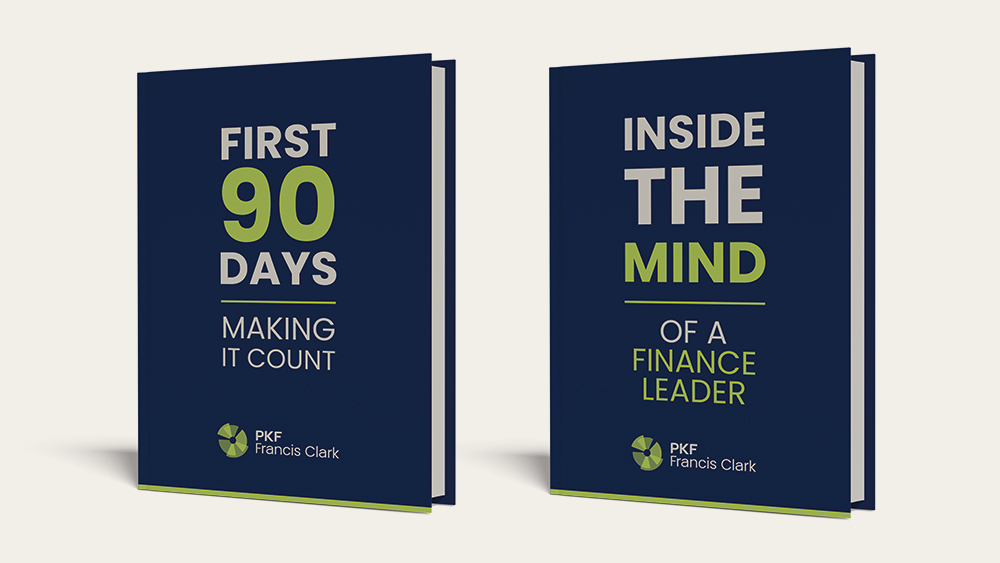
This article is inspired by one of two guides we’ve developed to support our clients as they work through key stages of their finance leadership journey. Each guide draws on our experience of advising businesses to provide practical advice, proven frameworks, and insights that help finance directors handle challenges and make the right decisions.
If you’d like to discuss your organisation’s priorities or find out how we can support your business, get in touch with our team using the form above. We’d be happy to start the conversation!
Take the next step in your finance transformation journey
Get in touch to explore how our specialists can help you build a finance function that delivers greater insight, efficiency and strategic value to your organisation.
FAQs about finance transformation
What do you mean by finance transformation?
Finance transformation is improving how a finance department operates by enhancing people, processes, systems, and governance. The idea is to create a more optimised, data-driven finance function that boosts strategic planning and long-term business growth.
What is a financial roadmap?
A financial roadmap is a strategic plan that outlines the priorities, timelines, and resources needed to achieve your finance transformation goals. It gives coherent direction for improving the finance team over a defined period; usually 12 months or longer.
What should a financial roadmap include?
An effective financial roadmap includes a vision, strategic objectives, priority initiatives, timelines, resource requirements, and success measures. It also highlights the main stakeholders and how progress will be monitored and communicated throughout the transformation programme.
How do I start finance transformation?
For new finance directors, a natural point to develop a finance transformation roadmap is after the first 90 days. By this stage, you’ll have a good understanding of the business, built relationships with key stakeholders, and spotted the most important opportunities for improvement.
Use the insights from your first 90 days to define your vision, align stakeholders, and develop a specific 12-month roadmap.
How long should a finance transformation roadmap cover?
Most finance transformation roadmaps cover the next 12 months. This gives enough time to provide early wins, implement larger strategic initiatives, and measure progress, while remaining flexible enough to adapt as your business priorities evolve.
How do you get stakeholder buy-in for finance transformation?
Positive financial transformation depends on securing early backing from senior leaders. Sharing a distinct vision, explaining the business benefits, and presenting realistic priorities and timelines can help build confidence and maintain momentum throughout the programme.
What’s the difference between a finance transformation roadmap and a project plan?
A finance transformation roadmap sets the overall strategic direction for the finance team, outlining priorities, objectives, and where you want it to be in the future.
A project plan focuses on the detailed tasks, milestones, and deliverables needed to complete a project within that roadmap.
What are the biggest challenges in finance transformation?
The main challenges include unclear priorities, limited stakeholder buy-in, competing business demands, and trying to implement too many changes at once. A well-structured roadmap helps finance directors focus on the initiatives that will deliver the biggest long-term value.
Is there a financial roadmap template?
A financial roadmap template can give you a good starting point, but it should always be tailored to your organisation’s goals, priorities and, of course, resources. The best finance transformation roadmaps reflect your business strategy, stakeholder needs, and the changes you want to deliver over the next 12 months.
Latest news



Construction businesses continue to face pressure as insolvency levels remain high
30 October 2026
Read

Founders' relief, BADR and capital gains tax: Budget tax changes for business owners planning a sale
29 October 2026
Read





Is a tourist tax coming? What could the visitor levy mean for hospitality businesses?
28 October 2026
Read